Strategie, leiderschap en verandering voor organisaties die durven te vragen waarom we de dingen doen zoals we ze doen.
LYNG is een Scandinavisch adviesbureau voor leiders, teams en organisaties die anders willen kijken naar leiderschap, besluitvorming en verandering.
Via trainingen, leiderschapsontwikkeling en langdurige adviestrajecten werken we rond drie thema’s: Feministisch Leiderschap, Living Strategy en Duurzame Verandering.
We dagen vertrouwde manieren van denken uit om ruimte te maken voor iets dat meer leeft.
[Ontdek LYNG]
[Werk met ons samen]
Waar we aan werken
Feministisch Leiderschap
Leiderschap gaat ook over macht.
Wie heeft macht? Naar wie wordt geluisterd? Wie neemt de beslissingen? En hoe beïnvloeden de structuren en normen om ons heen de manier waarop we leidinggeven?
Feministisch Leiderschap helpt leiders en organisaties om macht beter te begrijpen, bestaande ideeën over leiderschap ter discussie te stellen en manieren van leidinggeven te onderzoeken met meer bewustzijn, zorg en verantwoordelijkheid.
[Ontdek Feministisch Leiderschap →]
Living Strategy
Strategie zou geen document moeten zijn dat één keer per jaar uit de la komt.
Wij zien strategie als een levende praktijk: iets wat mensen begrijpen, gebruiken en blijven aanpassen wanneer de wereld om hen heen verandert.
Living Strategy helpt organisaties richting te creëren, duidelijkere keuzes te maken en de mensen te betrekken die de strategie uiteindelijk tot leven moeten brengen.
[Ontdek Living Strategy →]
Duurzame Verandering
Verandering aankondigen is makkelijk. Ervoor zorgen dat die verandering betekenisvol is en blijft, is een stuk moeilijker.
We werken met organisaties om de systemen, relaties en gedragspatronen achter verandering te begrijpen en omstandigheden te creëren waarin nieuwe manieren van werken daadwerkelijk wortel kunnen schieten.
Want duurzame verandering gaat niet alleen over waar je naartoe wilt. Het gaat ook over hoe je daar komt, wie onderweg geraakt wordt door de keuzes die je maakt en wat er overblijft wanneer het veranderproces voorbij is.
[Ontdek Duurzame Verandering →]
Wij geloven dat leiderschap verder moet reiken
Organisaties bestaan niet op zichzelf.
Elke beslissing is verbonden met iets buiten de vergaderruimte: medewerkers en klanten natuurlijk, maar ook leveranciers, gemeenschappen, grondstoffen, ecosystemen en de samenleving.
Daarom stellen we een vraag waarop niet altijd een eenvoudig antwoord bestaat:
Hoe ver reikt onze verantwoordelijkheid?
Ons werk wordt beïnvloed door feministische en systemische perspectieven op leiderschap. We kijken naar macht, relaties en verantwoordelijkheid, maar ook naar de grotere systemen waar organisaties deel van uitmaken.
Het gaat er niet om alle antwoorden te hebben.
Het gaat erom betere vragen te durven stellen over hoe we leidinggeven, welke keuzes we maken en welke gevolgen die keuzes hebben.
[Waarom LYNG bestaat →]





















Bespoke Consulting & Learning
Drie manieren om met ons te werken
Sommige mensen ontmoeten LYNG tijdens een driedaagse training. Andere organisaties nodigen ons uit om maandenlang met hen samen te werken.
Open trainingen
Onze professionele trainingen brengen mensen uit verschillende organisaties, sectoren en landen samen rond leiderschap, strategie en verandering.
Verwacht theorie, gesprekken en experimenten, maar vooral veel ruimte om te werken met je eigen praktijk.
[Bekijk onze trainingen →]
Trainingen voor organisaties
Breng het leren naar je eigen organisatie.
We ontwerpen trainingen en leiderschapsprogramma’s voor teams en organisaties en stemmen inhoud, vorm en planning af op jullie dagelijkse praktijk.
[Praat met ons over een programma →]
Langdurige samenwerking
Soms is een training niet genoeg.
In onze langere adviestrajecten werken we gedurende meerdere maanden naast en binnen de organisatie. We observeren, stellen vragen, faciliteren, dagen uit en werken samen aan strategische en organisatorische vraagstukken die moeilijk van buitenaf op te lossen zijn.
Geen rapport dat we aan het einde afleveren om daarna weer te verdwijnen.
We doen het werk samen.
[Ontdek hoe je met LYNG kunt samenwerken →]
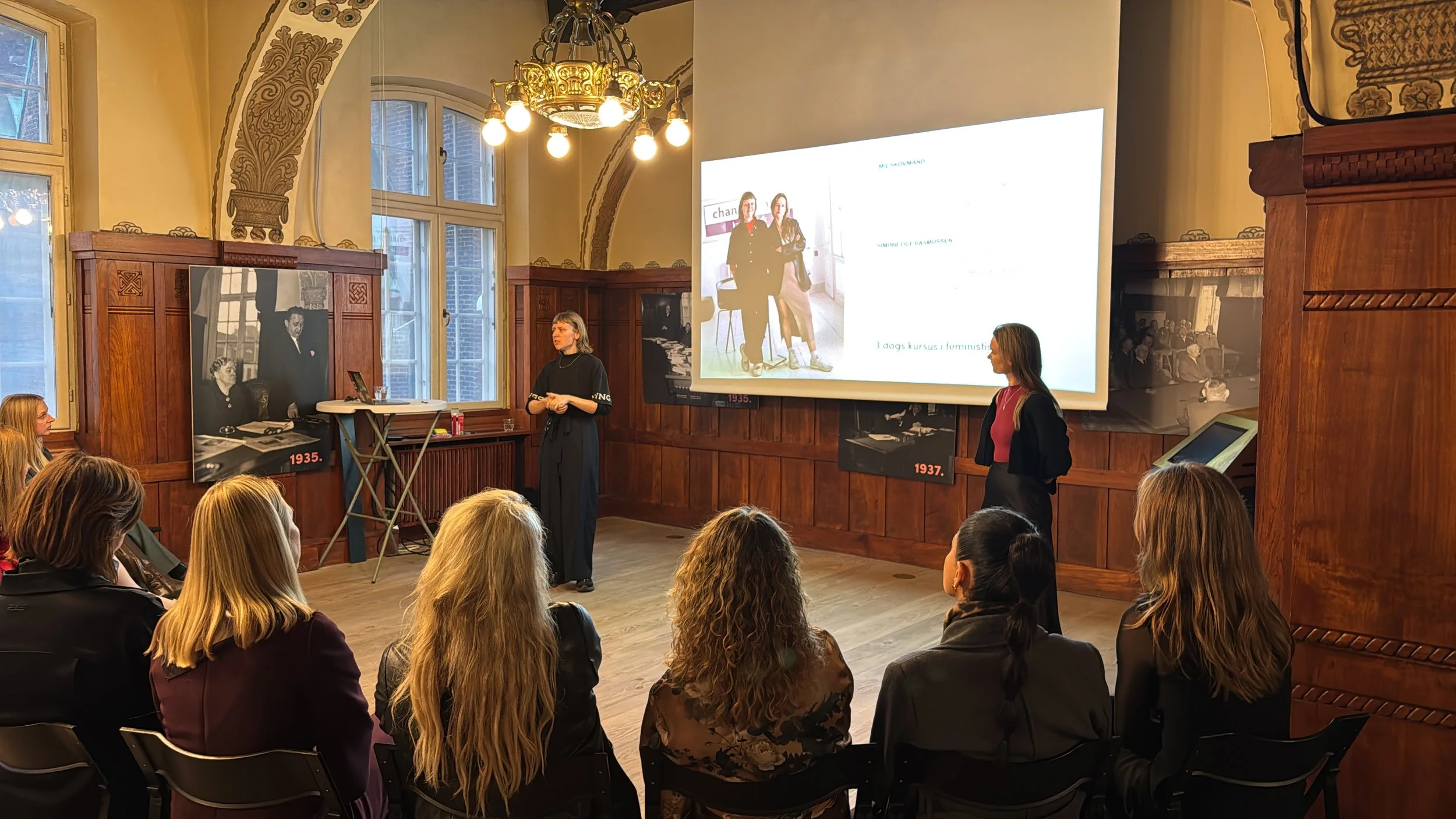
Professional Courses
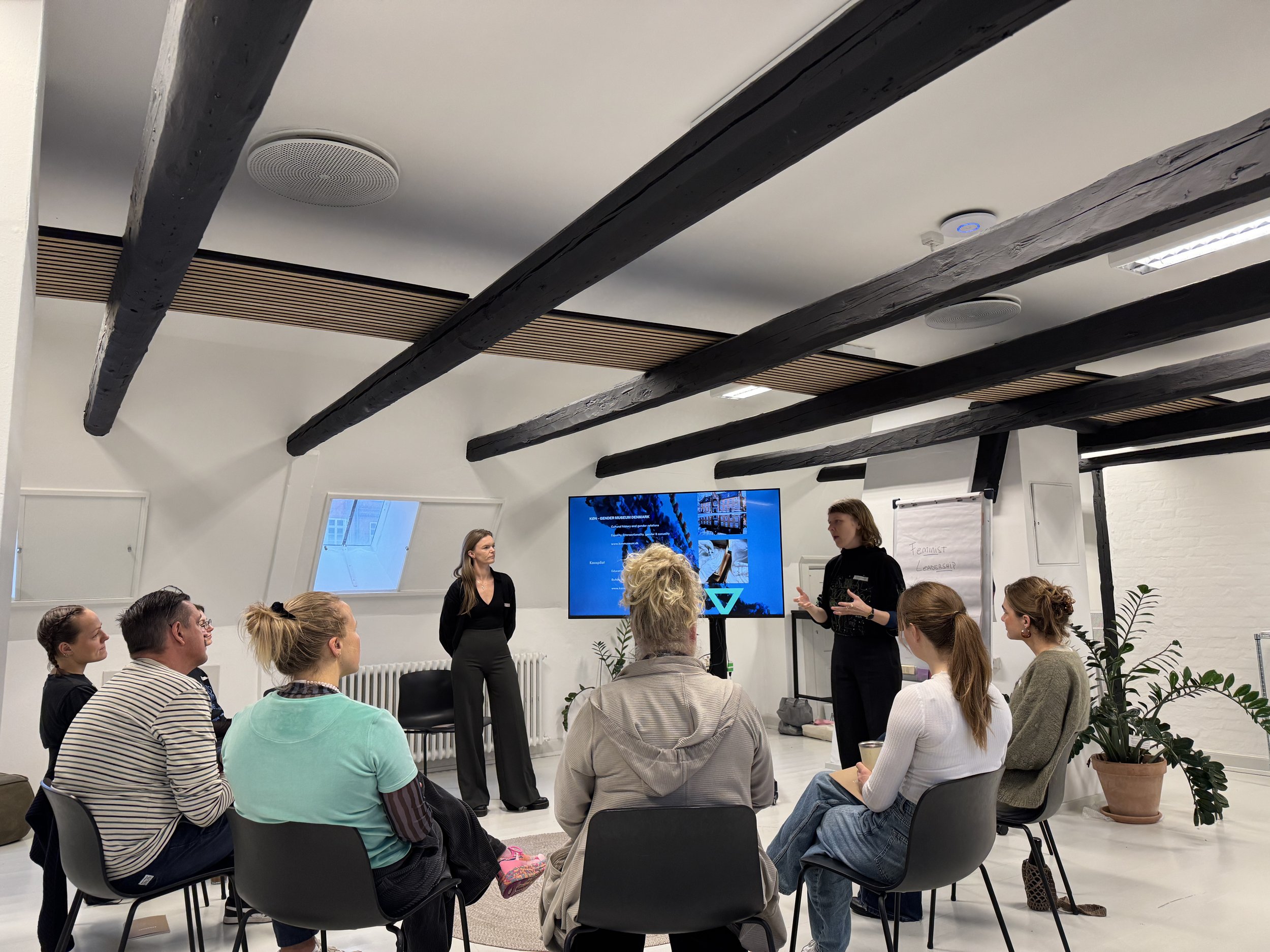
Feminist Leadership
A 3-day leadership course about power, relationships and different ways of leading
How do we lead people without simply reproducing the ideas about power, authority and success that we ourselves grew up with?
Feminist Leadership is a three-day leadership development course for people who want to explore their own way of leading and gain new perspectives on power, relationships, care, inclusion and responsibility.
For us, feminist leadership isn't about women learning to lead more like women. And it isn't about replacing one leadership model with another.
It is about examining the structures and norms that shape our organisations – and ourselves.
Who gets to speak? Who gets heard? Who makes the decisions? What behaviours do we reward? How do we use the power we have?
And what happens when we begin to understand leadership less as control and more as creating the conditions for other people to take responsibility, contribute and grow?
This first module is about learning to see.
To notice power. To recognise patterns. To question what has become normal. And to become more aware of your own position within the systems you are trying to change.
Power is not a dirty word
Power exists in every organisation and every relationship.
So we need to be able to talk about it.
During the course, we explore both visible and invisible forms of power and examine how they influence decisions, collaboration, organisational culture and our relationships with one another.
Formal authority is only part of the picture.
Power also exists in who has access to information. Who knows whom. Who feels comfortable speaking in a room. Whose expertise is automatically trusted. Who can challenge a decision without consequences. And who learns that staying quiet is safer.
We also turn the lens towards ourselves.
What power do you have?
When do you use it?
When do you hold back?
What power might you have that you don't even notice anymore?
And how could you use it more consciously?
From reflection to practice
We don't believe in spending three days looking at PowerPoint slides.
The course moves between short theoretical inputs, practical exercises, reflection, conversations, cases and experiments with your own leadership practice.
We work with:
power, privilege and blind spots
feminist perspectives on leadership
authority, responsibility and decision-making
psychological safety and inclusion
relationships, trust and care
diversity and different perspectives
systemic leadership and organisational culture
your own role and practice as a leader
Throughout the three days, you will bring situations from your own professional life into the room and examine them from new perspectives.
The point isn't simply to understand feminist leadership.
It is to begin noticing what changes when you look at your own organisation – and yourself – differently.
Who is this course for?
The course is for leaders, team leads, project managers, HR and People & Culture professionals, consultants, facilitators and others working with people, organisations and change.
You don't need any previous knowledge of feminist leadership.
You don't need to arrive with the right vocabulary.
And you certainly don't need to arrive with the right answers.
But you do need to be curious about your own leadership and willing to examine some of the things we usually take for granted.
What will you take with you?
After three days, you will have a deeper understanding of how power, norms and relationships influence your leadership and your organisation.
You will have new perspectives on your own role as a leader and practical approaches for creating more inclusive and psychologically safe teams, working more consciously with power and care, and bringing your organisation's values closer to the way people actually work and make decisions.
You will also leave with new questions.
Because you won't leave with a checklist for feminist leadership.
Feminist leadership isn't a model you implement on Monday morning.
It is a practice.
A way of continually paying attention to your own power, your relationships and the systems you are part of.
And sometimes change begins simply by learning to see what has become so familiar that we no longer notice it.
This is Module 1: Learning to see
Feminist Leadership is designed as a learning journey.
Module 1 is about learning to see: power, norms, structures, relationships, blind spots and your own position within them.
Our second module, Stay with the Trouble, takes the next step.
It moves from seeing to doing: practising how to navigate power, conflict, care, responsibility and difficult decisions when leadership becomes messy.
You can take Module 1 on its own. If you want to continue developing your practice, Module 2 builds directly on the foundations established here.
[Explore Stay with the Trouble →]
Language
LYNG is an international learning environment, and our open courses are facilitated in English as standard.
For programmes designed exclusively for Danish participants, we can facilitate the full course in Danish.
We also facilitate Feminist Leadership in Spanish for programmes in Spain and Latin America.
For programmes in Germany and Japan, we work in English and can arrange professional interpretation when needed.
If you are considering bringing Feminist Leadership to your organisation or country, talk to us. We can explore the format and language that make sense for your group.
What participants say
“What I loved most was the atmosphere in the room from the second you stepped in. Mie and Simone created a space that felt safe, curious and honest, where people dared to ask difficult questions and share real experiences from their own lives and organisations.
The perspectives on power stayed with me in particular: looking at power in all its forms, including the informal and unspoken parts of an organisation's culture, and starting with my own power and my own part in it.
It gave me a new language for things I see every day as a leader. A lot of it I might already have been practising, but it gave me a broader understanding and new angles on my blind spots.
The balance between theory, reflection, conversation and challenges worked really well. No doubt, after those three days I am a better leader. In the future, I'll be even better.”
— Participant, Feminist Leadership Team 1
Bring Feminist Leadership to your organisation
Feminist Leadership can also be designed as a closed programme for your organisation, leadership team or network.
We adapt the programme to your context while keeping the questions at its core: power, relationships, responsibility, care and the structures that shape how people work together.
If you're curious about what Feminist Leadership could look like in your organisation, let's have a conversation.
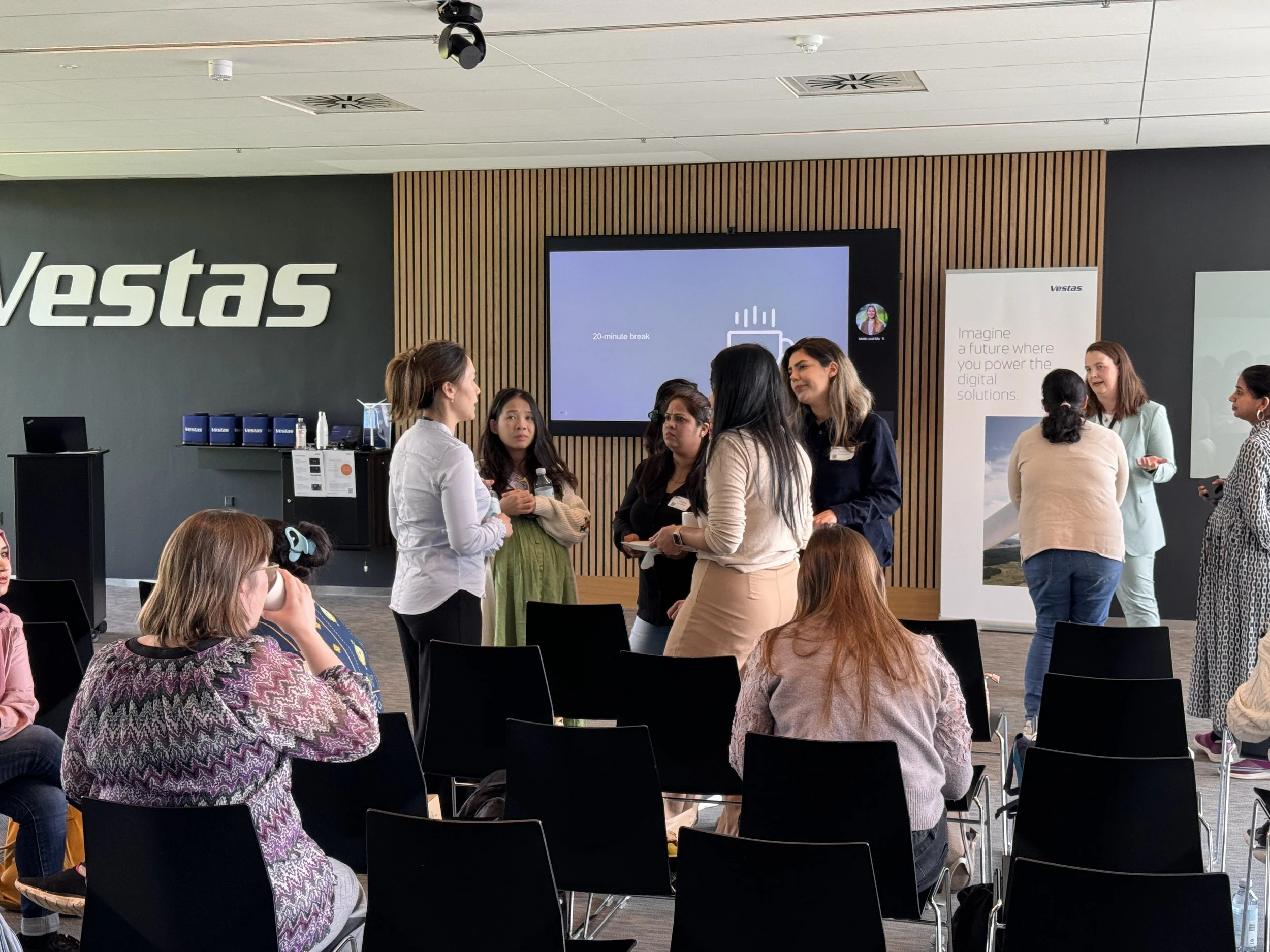
Stay with the Trouble
Feminist Leadership – Module 2
From feminist leadership to feminist leadership practice
It is one thing to recognise power, norms and the structures we are part of.
It is another to know what to do about them.
Stay with the Trouble is the second module of our Feminist Leadership programme. A three-day leadership course where we move from understanding to practice and explore how you can bring a feminist perspective into the reality of your everyday leadership.
This is where things become more concrete. More personal. And perhaps a little more uncomfortable.
What do you do when your values meet the pressure of everyday work?
When a decision has to be made quickly?
When conflict appears?
When some people take up too much space and others too little?
When care and performance seem to pull in opposite directions?
When you understand the power dynamics in the room – but still have to decide what to do next?
This is where feminist leadership gets interesting.
Build your own feminist leadership toolbox
There is no single right way to be a feminist leader.
So these three days aren't about giving you another leadership model to follow.
Instead, we work on expanding your repertoire as a leader.
You bring real situations from your own professional life into the room. Together, we examine them, challenge your habitual responses and experiment with different ways of acting.
We work with:
power and power dynamics in practice
difficult conversations and conflict
care, boundaries and responsibility
decision-making and participation
psychological safety and belonging
facilitation and inclusive processes
your own patterns and blind spots as a leader
systemic leadership and the consequences of our decisions
The aim isn't to collect as many tools as possible.
It is to have more possibilities available to you when leadership becomes difficult.
Stay with the Trouble
When something becomes difficult, our instinct is often to solve it quickly.
Find the answer. Make the decision. Resolve the conflict. Move on.
But leadership isn't always about making complexity disappear.
Sometimes we need to stay with it a little longer.
To understand what is actually happening.
To listen to perspectives that don't immediately fit together.
To notice the power in the room.
To resist the temptation to simplify something just because complexity makes us uncomfortable.
To accept that conflicting needs can exist at the same time – and only then decide how we want to act.
That is what we mean by Stay with the Trouble.
It doesn't mean avoiding decisions.
It means becoming more conscious of what is happening before we make them.
Three days of practice – not just theory
Module 2 is built around practice.
We use real cases, exercises, reflection, feedback, facilitation and experimentation.
You will have the opportunity to try different approaches in a space where you don't need to have the right answer the first time.
We work directly with your own leadership practice – particularly the moments when your intentions and your actual behaviour don't quite match.
You might believe deeply in participation and still take over when time is short.
You might value care and still avoid a difficult conversation.
You might want everyone to have a voice and still notice that the same people keep speaking.
You might understand your own power and still struggle with how to use it.
Those gaps aren't failures.
They are where the practice begins.
The goal isn't perfection.
The goal is to become more aware of the choices you make – and to have more ways of responding available to you.
From seeing to acting
Module 1 of Feminist Leadership is about learning to see.
Power. Norms. Structures. Relationships. Blind spots. And your own position within them.
Module 2 is about learning to act.
What do you do with what you can now see?
How do you have the conversation?
How do you facilitate the meeting differently?
How do you make a decision when people's needs conflict?
How do you use your power consciously rather than pretending it isn't there?
And how do you continue practising when the organisation around you doesn't change overnight?
Stay with the Trouble is where we begin turning awareness into practice.
[Explore Feminist Leadership – Module 1 →]
Who is this course for?
The course is for leaders, team leads, project managers, HR and People & Culture professionals, consultants, facilitators and changemakers who already have a foundational understanding of feminist leadership and want to work more practically with their own leadership.
Feminist Leadership – Module 1 is the natural foundation for this course.
If you haven't taken Module 1 with LYNG but already have substantial experience working with feminist leadership, power and organisational structures, talk to us before registering. We'll help you assess whether Module 2 is the right place to join.
You don't need to arrive as a perfect feminist leader.
There is no such thing.
You need to arrive willing to practise.
What will you take with you?
You will leave with your own feminist leadership toolbox: practical methods, new perspectives and different ways of working with power, relationships, conflict, care and decision-making.
But perhaps more importantly, you will become better at noticing what is happening while it is happening.
At pausing before the automatic response.
At recognising what is happening in the room – and what might be happening beneath the surface.
At choosing how you want to use your power.
At knowing when to act and when to listen a little longer.
And at staying with difficulty long enough for another possibility to emerge.
Because feminist leadership isn't something you complete.
It is something you practise.
Language
LYNG is an international learning environment, and our open courses are facilitated in English as standard.
For programmes designed exclusively for Danish participants, we can facilitate the full course in Danish.
We also facilitate Feminist Leadership in Spanish for programmes in Spain and Latin America.
For programmes in Germany and Japan, we work in English and can arrange professional interpretation when needed.
If you are considering bringing Stay with the Trouble or the full Feminist Leadership programme to your organisation or country, talk to us. We can explore the format and language that make sense for your group.
Bring Feminist Leadership to your organisation
Module 1 and Stay with the Trouble can also be designed as a longer Feminist Leadership journey for your organisation, leadership team or network.
We can work with your own cases, culture and organisational reality, giving participants time between modules to experiment with their leadership practice and bring what they discover back into the next part of the programme.
Because changing how we lead doesn't happen in three days.
It happens in what we do afterwards.
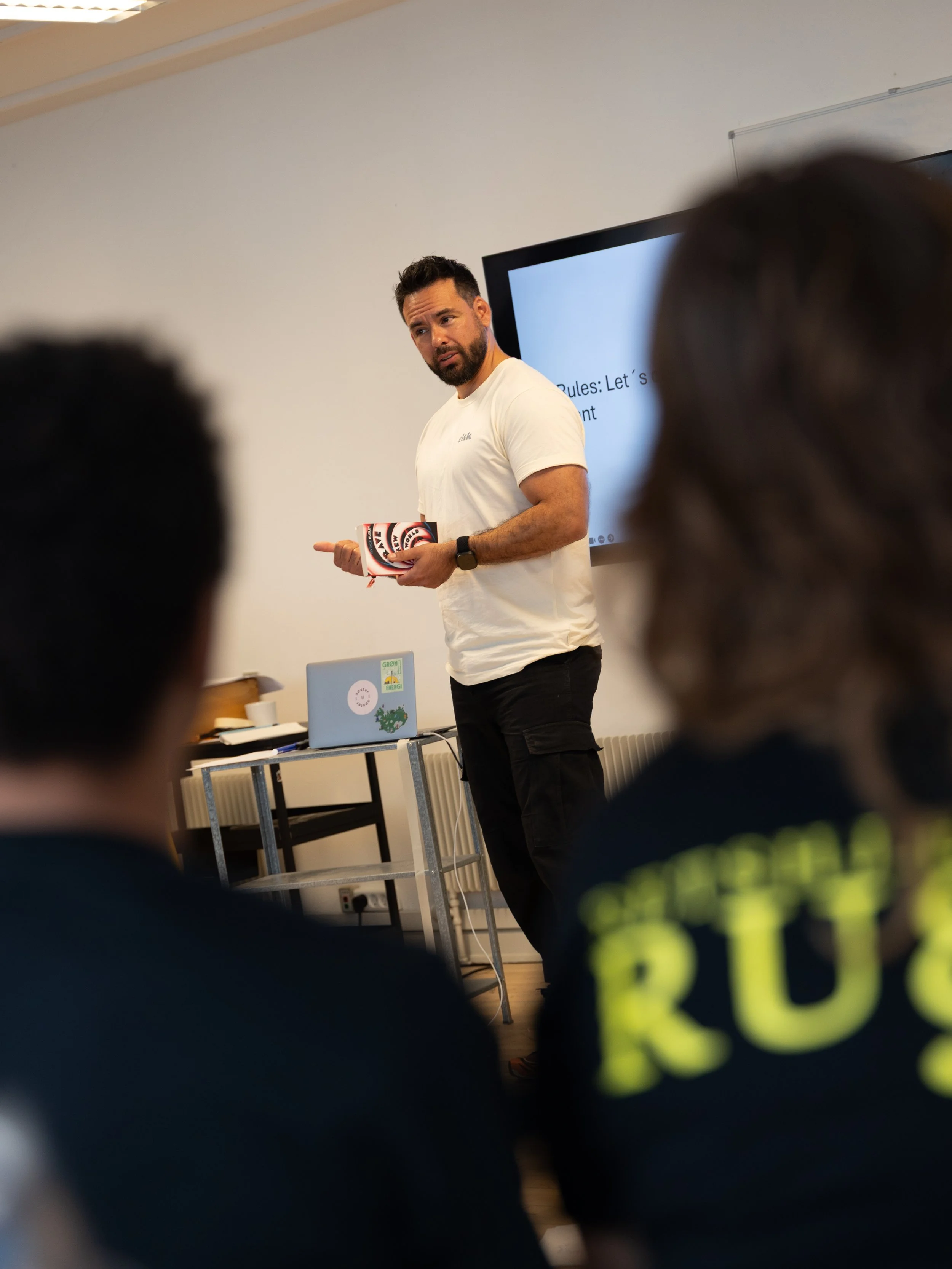
Living Strategy
A 3-day strategy course for turning strategy into practice
A lot of time goes into developing strategies. They are researched, discussed, written, presented and communicated across the organisation. And still, many of them slowly disappear from everyday work.
Living Strategy is a three-day strategy course for leaders, project managers, strategists and people working with organisational development and change. It is for people who want strategy to be useful beyond the strategy process itself.
We work with strategy as a shared direction for making choices, rather than a plan that tries to predict the next five years.
This matters because organisations operate in conditions that change constantly. Technology develops, markets shift, political conditions change, and the climate crisis and demographic changes are creating new questions about the role and responsibility of organisations.
Planning still matters. But a plan and a strategy are not the same thing.
Living Strategy is about developing a strategic direction that can guide an organisation while still being able to respond to what happens along the way.
Strategy needs to be used
The starting point for Living Strategy is simple:
A strategy is only alive when people use it.
That changes what we pay attention to during strategy development.
Of course, we work with direction, priorities and strategic choices. But we are just as interested in what happens afterwards. How does a strategy influence an actual decision? Do people understand why certain choices were made? Can teams connect their work to the direction of the organisation? And what happens when reality doesn't behave as the strategy process expected?
We work with creating enough clarity for people to make decisions without pretending that every decision can be planned in advance.
That also means looking at the assumptions behind the strategy. Every strategy contains ideas about how the world works, what customers or communities need, what the organisation is capable of and what might happen next.
Some of those assumptions will be right.
Others won't.
A living strategy gives us a way to notice the difference.
Three days working on your own strategy
This isn't a strategy course built around a fictional company or a case somebody else has written.
You bring a real strategic challenge from your own organisation.
During the three days, we use that challenge to explore different approaches to strategy development and strategic leadership. We combine strategic thinking, systems thinking, facilitation and practical strategy tools with conversation, experimentation and reflection.
We work with topics including:
strategy in complexity and uncertainty
strategic choices and prioritisation
organisational purpose and direction
assumptions and mental models
systems thinking and interdependencies
scenarios and possible futures
participation in strategy development
strategic conversations
experimentation and learning
moving from strategy to implementation
keeping strategy relevant over time
The intention is that you don't only learn about these approaches. You use them while you are with us.
By the end of the course, your strategic challenge should have moved.
Strategy means making choices
One of the problems with strategic planning is that strategies can easily become collections of ambitions.
We want to grow, innovate, become more sustainable, improve collaboration, strengthen the culture, reach new markets and become better at what we already do.
All of those things might be desirable. They are not necessarily a strategy.
Strategy requires choices about where to focus limited time, attention and resources. It also requires deciding what not to pursue.
During Living Strategy, we therefore spend time looking at what the organisation might need to stop doing.
That can be uncomfortable. Organisations become attached to projects, products, habits and ways of working, particularly when they were successful in the past.
But something having worked before is not, by itself, a good reason to continue doing it.
Sometimes strategic development is as much about letting go as it is about creating something new.
Strategy is not only a leadership document
Senior leadership may be responsible for the strategy, but people throughout an organisation make decisions that affect it every day.
They decide how to respond to a customer, how to prioritise a project, whether to pursue an opportunity, how to use a limited budget and what deserves their attention.
This is why involvement matters in strategy development.
That doesn't mean everybody needs to decide everything. It means that if we expect people to act strategically, they need enough understanding of the organisation's direction, priorities and choices to make good decisions themselves.
For us, one of the most useful tests of a strategy is therefore not whether people can repeat it.
It is whether they can use it when they have to make a decision.
Working strategically when we don't know what comes next
Uncertainty is often treated as a problem that better strategic planning will eventually remove.
Usually, it won't.
Instead, we work with ways of making decisions when information is incomplete. We examine assumptions, explore different possible futures and think about what we would need to learn before committing too much time or too many resources to one direction.
Sometimes that means experimenting before scaling something.
Sometimes it means changing how we implement the strategy.
And sometimes new information tells us that an assumption behind the strategy itself no longer holds.
Being able to respond to that is not a failure of strategy. It is part of strategic leadership.
A Living Strategy should provide enough stability to create direction and enough flexibility to learn.
Who is Living Strategy for?
Living Strategy is for leaders, strategy leads, project managers, consultants, entrepreneurs and people working with strategy, organisational development or organisational change.
You don't need to work professionally with strategy, and you don't need to arrive with a finished strategic plan.
You do need something real to work on.
That might be an organisation developing a new strategy, a team trying to clarify its direction, a strategic initiative that has become stuck, or a situation where the existing strategy no longer seems to fit what is happening around you.
Bring that challenge with you.
We will use it throughout the course.
What will you leave with?
After three days, you will have worked directly on your own strategic challenge and used different methods for creating direction, making strategic choices, testing assumptions, involving others and working with uncertainty.
You will leave with strategy tools you can use again with your team or organisation, but the aim isn't to send you home with a generic strategy toolkit.
The more important outcome is a different way of working with strategy.
One where strategy is not finished when the strategy document is approved.
One where implementation and learning are part of the strategic process.
And one where the organisation can continue making good decisions even when circumstances change.
Strategy doesn't need to tell us exactly where we will be in five years. It needs to help us make better choices on the way there.
Language
Our open courses are normally facilitated in English, allowing people from different countries and organisations to learn together.
When everyone in the group is Danish, Living Strategy can be facilitated entirely in Danish. We also offer the course in Spanish in Spain and Latin America.
For programmes in Germany and Japan, we can work in English with professional interpretation when needed.
If you would like to bring Living Strategy to another country or organisation, talk to us about what would work for your group.
Bring Living Strategy into your organisation
Living Strategy can also be used directly as a strategy development process inside an organisation.
Instead of attending a course and applying the methods afterwards, your team works on your actual strategy while we facilitate the process.
This can be an intensive process with a leadership team or a broader strategy process involving people from different parts of the organisation.
We help you examine the situation around you, clarify direction, surface assumptions, make choices and involve the people who will eventually have to work with the strategy.
The goal isn't to leave you with our strategy.
It is to help you build one that your organisation understands and can actually use.
Follow Our Journey